- Bathroom RemodelingTubs, vanities, tile and fixtures
- Showers & Glass DoorsWalk-in showers, benches and glass doors
- Niches & Accent TileShower niches, mosaics and borders
- Kitchen RemodelingBacksplashes, floors and full kitchens
- Tile FloorsKitchens, baths, entries and patterns
- Custom Tile WorkPatterns, borders and one-off details
- PaintingWalls, ceilings, trim and doors
- CarpentryTrim, doors, framing and built-ins
- Full RemodelsEvery room, start to finish
- Outdoor PatiosStone and tile patios
Epoxy grout vs cement grout: which one for your shower or floor.
Sanded, unsanded, high performance cement and epoxy: joint widths, sealing, stains and what is harder to install.
Updated November 2026. The sources are at the end of the page.
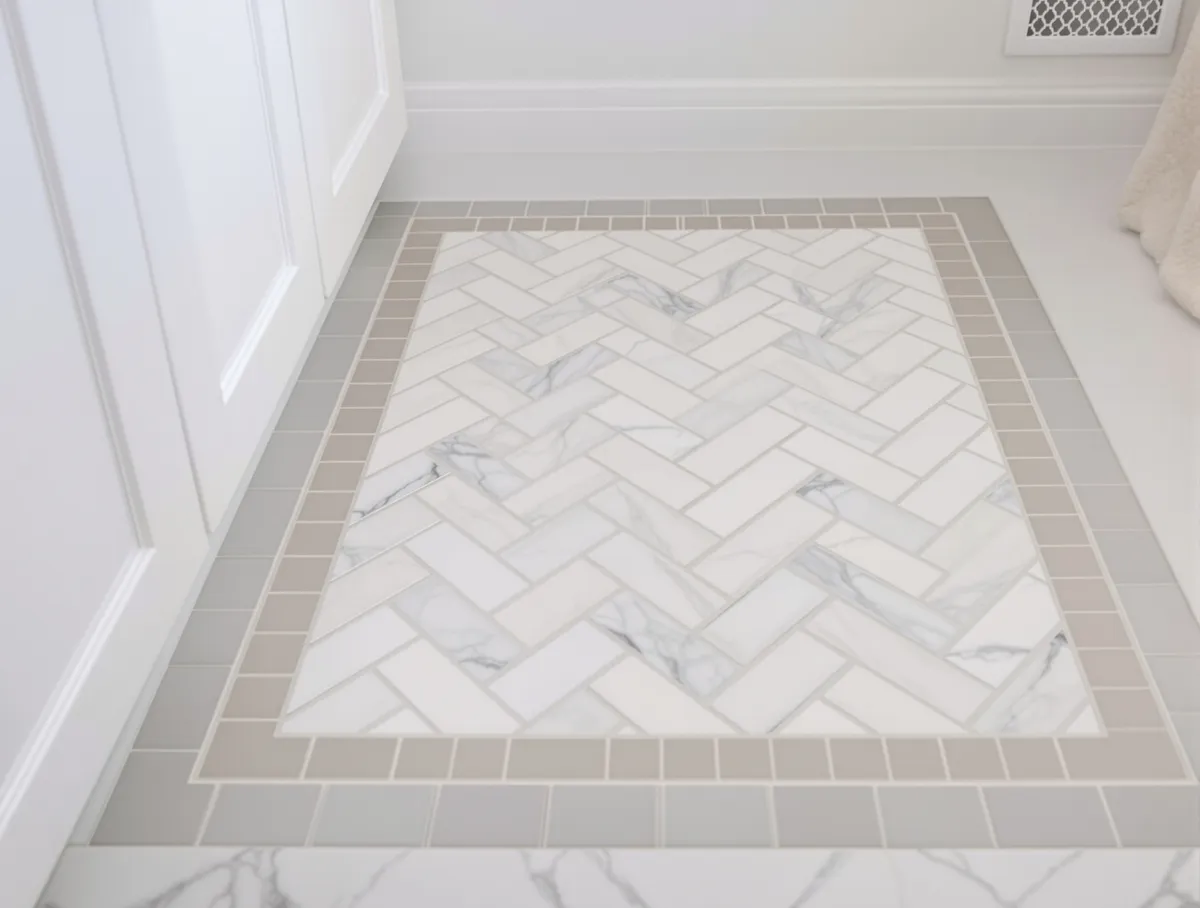
The short answer
Epoxy where stains and water work hardest, cement almost everywhere else.
Cement grout is the standard: sanded for wider joints, unsanded for narrow joints and for tile that sand would scratch. High performance cement grouts add polymers for better color and stain resistance. Epoxy grout is a two part resin. The makers say it does not need sealing and resists stains better, but it is harder to install and costs more, mostly in labor.
For a shower floor, a kitchen backsplash or a busy entry, epoxy or a high performance grout is worth a look. For most walls and dry floors, a good cement grout installed and cared for properly does the job.
The types
Four kinds of grout, and the joints they fill.
Joint width decides a lot. These ranges come from the manufacturers' own data sheets:
- Unsanded cement grout. For joints up to 1/8 inch, and for highly glazed or polished tile, marble and stone that a sanded grout would scratch. Custom Building Products rates its unsanded grout to ANSI A118.6.
- Sanded cement grout. For joints from 1/8 to 1/2 inch. The sand makes a hard, dense joint that resists shrinking and cracking. Custom's sanded grout meets ANSI A118.7, the high performance standard.
- High performance cement grout (ANSI A118.7). Cement grout with more polymer. MAPEI's Ultracolor Plus FA covers joints from 1/16 to 3/4 inch, is made to be color consistent, does not contribute to efflorescence, and MAPEI says a sealer is not typically required.
- Epoxy grout (ANSI A118.3). Two parts mixed on site: a resin and a hardener, with filler and color. Custom's CEG-Lite covers joints from 1/16 to 1/2 inch; MAPEI's Kerapoxy CQ covers 1/16 to 3/8 inch.
- Premixed grout. Ready to use from the pail, no mixing. Custom's Fusion Pro is one, for joints from 1/16 to 1/2 inch; it cures by drying, and the data sheet calls for a 24 hour cure.
If the joint is narrower than 1/8 inch, sanded grout is the wrong choice. If it is wide, unsanded grout is. Before the tile goes in, ask which grout and which ANSI standard your contractor plans to use, and check that your joint width is inside the range on its data sheet.
Stains and sealing
What the makers say about sealing.
- Standard cement grout. Custom's data sheet for its sanded grout says a penetrating sealer can be applied if you want extra protection. Grout sealers are made for exactly this: LATICRETE's heavy duty grout sealer is a penetrating sealer for sanded and unsanded cement grout that protects against oil and water based stains.
- High performance cement grout. MAPEI says its polymer technology reduces absorption and increases stain resistance compared with standard cement grout, and that a sealer is not typically required.
- Epoxy and premixed. Custom says CEG-Lite does not require sealing, MAPEI says Kerapoxy CQ needs no sealer, and Custom says Fusion Pro never needs sealing.
None of them is stain proof against everything left sitting on it. MAPEI notes that long exposure to any material raises the chance of a stain, so wipe spills when they happen.
Installing
Why epoxy is harder to put in.
Cement grout is mixed with water and gives an installer time. Custom lists a pot life of one to two hours for its sanded grout, and MAPEI 30 minutes to an hour for Ultracolor Plus FA.
Epoxy is a chemical cure, and the clock is short. For CEG-Lite, Custom gives a pot life of about 60 minutes at 75°F and says all grouting and cleaning should be done within 80 minutes. Epoxies are easiest to work between 70°F and 85°F. When it is colder the epoxy gets stiff and harder to spread; when it is hotter it sets faster. Haze left on the tile has to come off before it cures.
That matters in a Massachusetts winter, in an unheated addition or a cold basement bathroom. It is also why epoxy costs more: the material, and more careful, slower labor.
Color
Getting the color you picked.
Cement grout color can vary. Custom's data sheet lists the causes: tile type and porosity, jobsite and weather conditions, and how the grout is applied and cleaned. Adding extra water to the mix weakens the grout and causes color variation, and Custom says to use as little water as possible. Polymer cement grouts and epoxy are sold as color consistent.
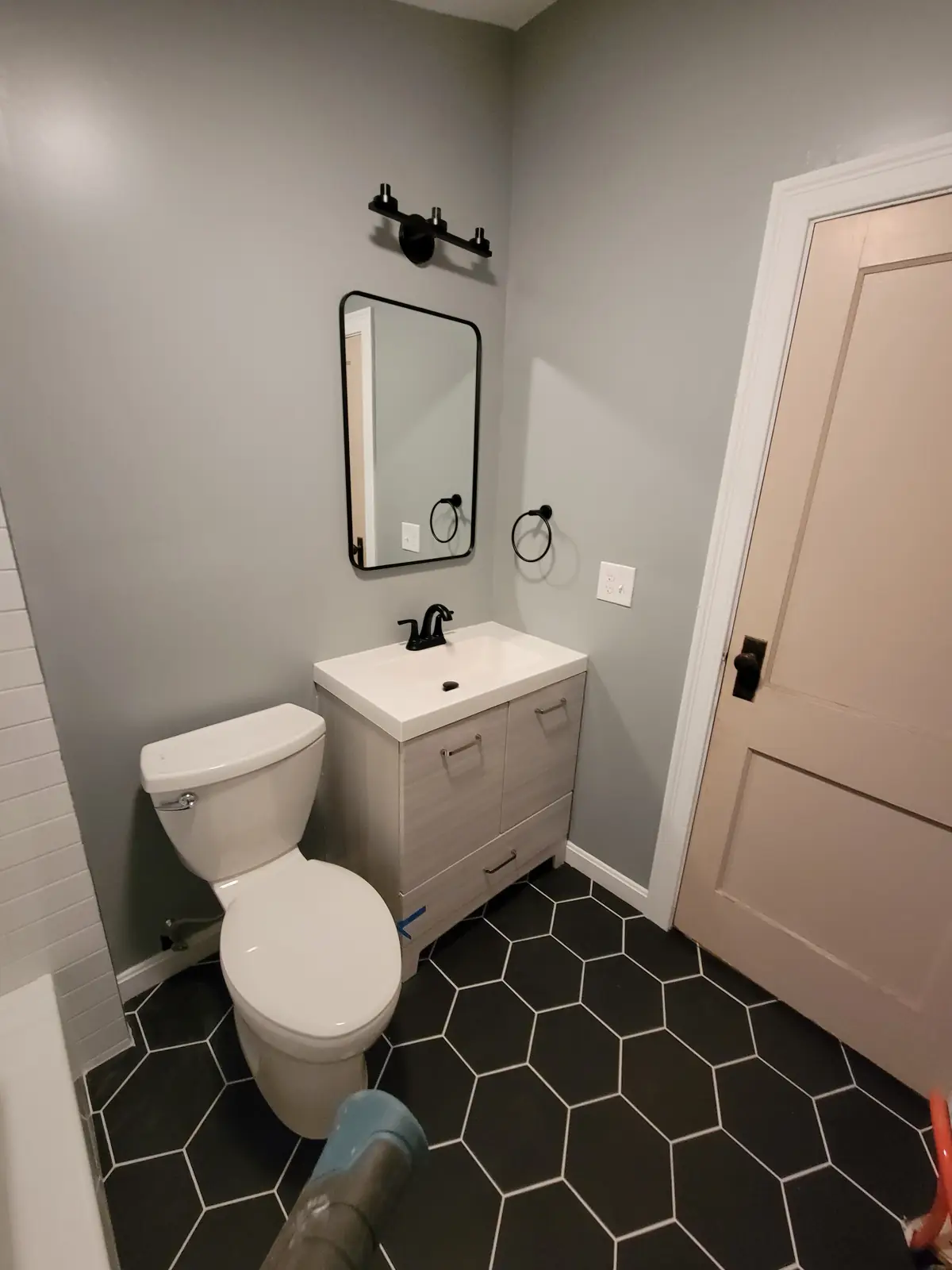
With porous, rough or textured tile and some porcelains, the makers say to seal or use a grout release on the tile before grouting, so the grout does not stain the tile. That matters most when the grout color contrasts with the tile, like white grout on a black floor.
Usually you choose the tile and the other finishes with our guidance, and the grout color is part of that choice. A small sample board of the tile with the grout next to it shows the result better than a color chip.
Where it matters
Shower floors, backsplashes and entries.
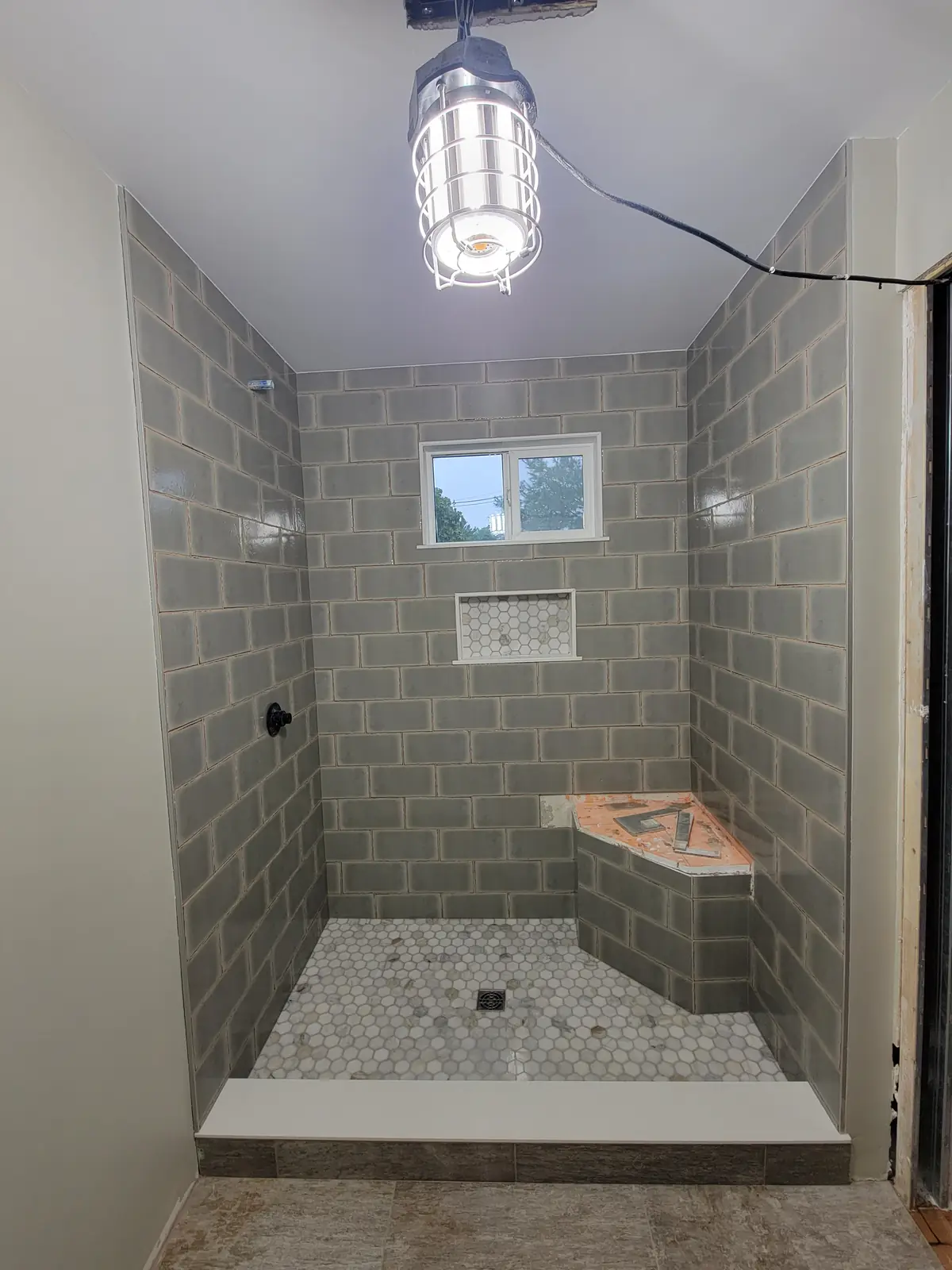
- Shower floors. Small mosaic tiles mean a lot of grout, under water every day. This is the strongest case for epoxy or a high performance grout.
- Kitchen backsplashes and counters. Grease, sauce and coffee. Custom lists countertops, backsplashes, tub and shower areas as uses for its epoxy grout, and MAPEI names countertops.
- Entries and mudrooms. Salt, sand and wet boots all winter.
- Corners and changes of plane. No grout goes there. The data sheets say movement joints and the corners where walls meet the floor get a flexible caulk or silicone, not grout.
Grout is one of the last steps of a shower. See our guide on how a bathroom remodel runs for the steps in order.
Repair
Regrouting instead of retiling.
Cracked, stained or missing grout does not always mean new tile. If the tile is sound and stays put, the old grout can be removed and the joints filled again, and that is the moment to choose the grout type that suits the room. Regrouting is one of the small repairs we take on, along with a few tiles, drywall, paint and shower glass.
If the same joint keeps cracking at a corner or where the wall meets the tub, it probably needed caulk, not grout.
Questions
What homeowners ask about grout.
Is epoxy grout better than regular grout?
It resists stains better and the makers say it never needs sealing. It is also harder to install and costs more. For a shower floor or a backsplash it is often worth it; for a dry wall, a good cement grout is fine.
Is epoxy grout good for a shower?
Yes. Custom Building Products lists tub and shower areas as uses for its epoxy grout, and a shower floor of small mosaic tile has a lot of grout under water every day.
Sanded or unsanded grout: which one do I need?
It depends on the joint. Custom Building Products rates its unsanded grout for joints up to 1/8 inch and its sanded grout for 1/8 to 1/2 inch. Unsanded is also for polished stone and glazed tile that sand would scratch.
Do I need to seal cement grout?
Standard cement grout can be sealed with a penetrating sealer for extra protection. MAPEI says its high performance polymer grout does not typically need a sealer, and epoxy grout does not need sealing at all.
Why does grout crack in a shower corner?
Corners and changes of plane move. The grout makers say those joints get a flexible caulk or silicone instead of grout.
Does Becker do regrouting?
Yes. Regrouting is one of the small repairs we take on, along with a few tiles, drywall, paint, floors and shower glass.
Sources
Where these answers come from.
Official pages first. Rules change: check the source, or ask us at the quote visit.
- Custom Building Products, Polyblend Plus Non-Sanded Grout
- Custom Building Products, Polyblend Plus Sanded Grout
- Custom Building Products, Polyblend Plus Sanded Grout technical data sheet (PDF)
- MAPEI, Ultracolor Plus FA grout
- MAPEI, Ultracolor Plus FA technical data sheet (PDF)
- Custom Building Products, CEG-Lite 100% Solids Epoxy Grout
- Custom Building Products, CEG-Lite technical data sheet (PDF)
- MAPEI, Kerapoxy CQ epoxy grout
- Custom Building Products, Fusion Pro Single Component Grout
- Custom Building Products, Fusion Pro technical data sheet (PDF)
- LATICRETE, STONETECH Heavy Duty Grout Sealer data sheet (PDF)
Last checked November 2026.
Keep going
Keep reading.
Costs, the service itself and the other guides.
Let’s build it.
Tell us about the job. We answer right away and book the visit.
Tell us about the job. We answer right away and book the visit.
Let’s build it.
Let’s build it.
Let’s build it.
Let’s build it.
Let’s build it.
Tell us about the job. We answer right away and book the visit.
Projects
Start to finish.
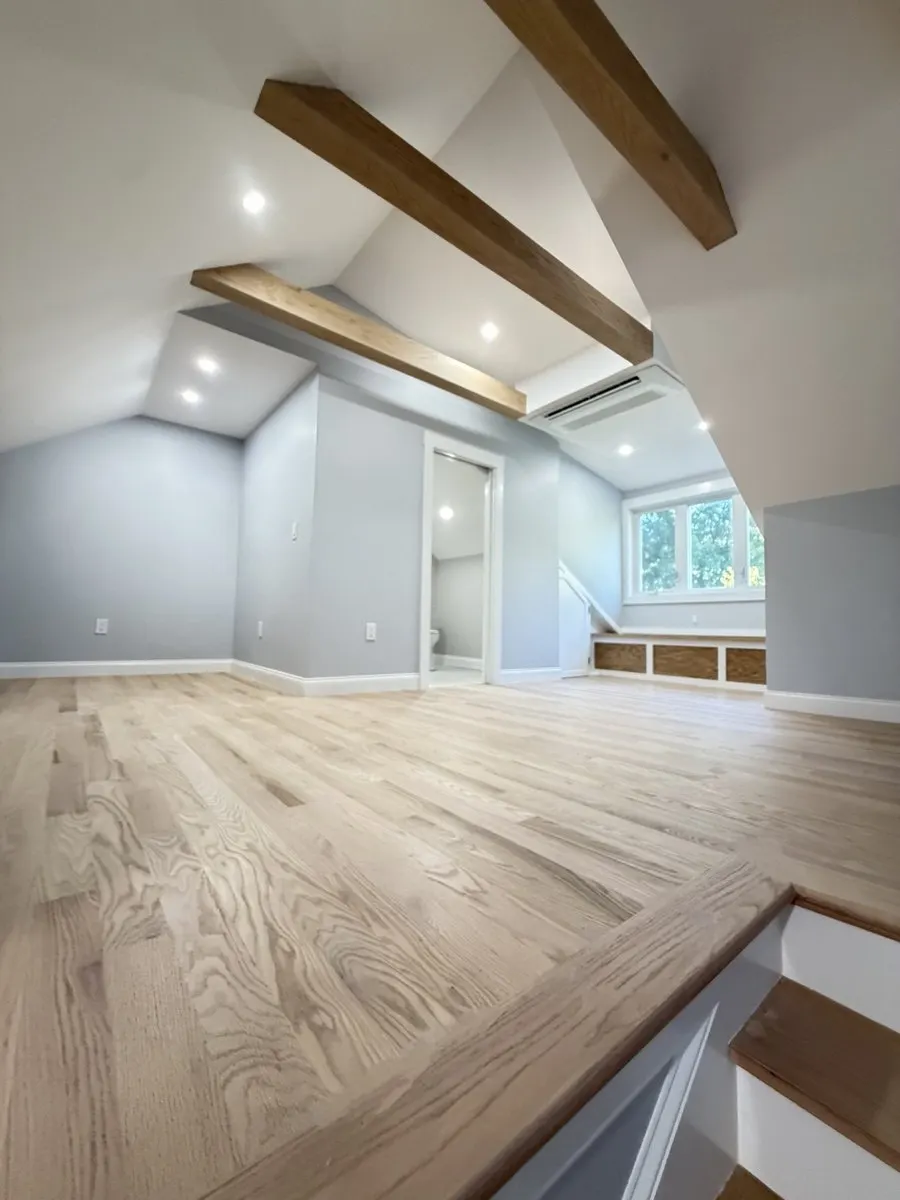 01 SaugusAn attic turned into a living floorAn open attic became a bright floor with a full bathroom, a window seat and a new oak stair.
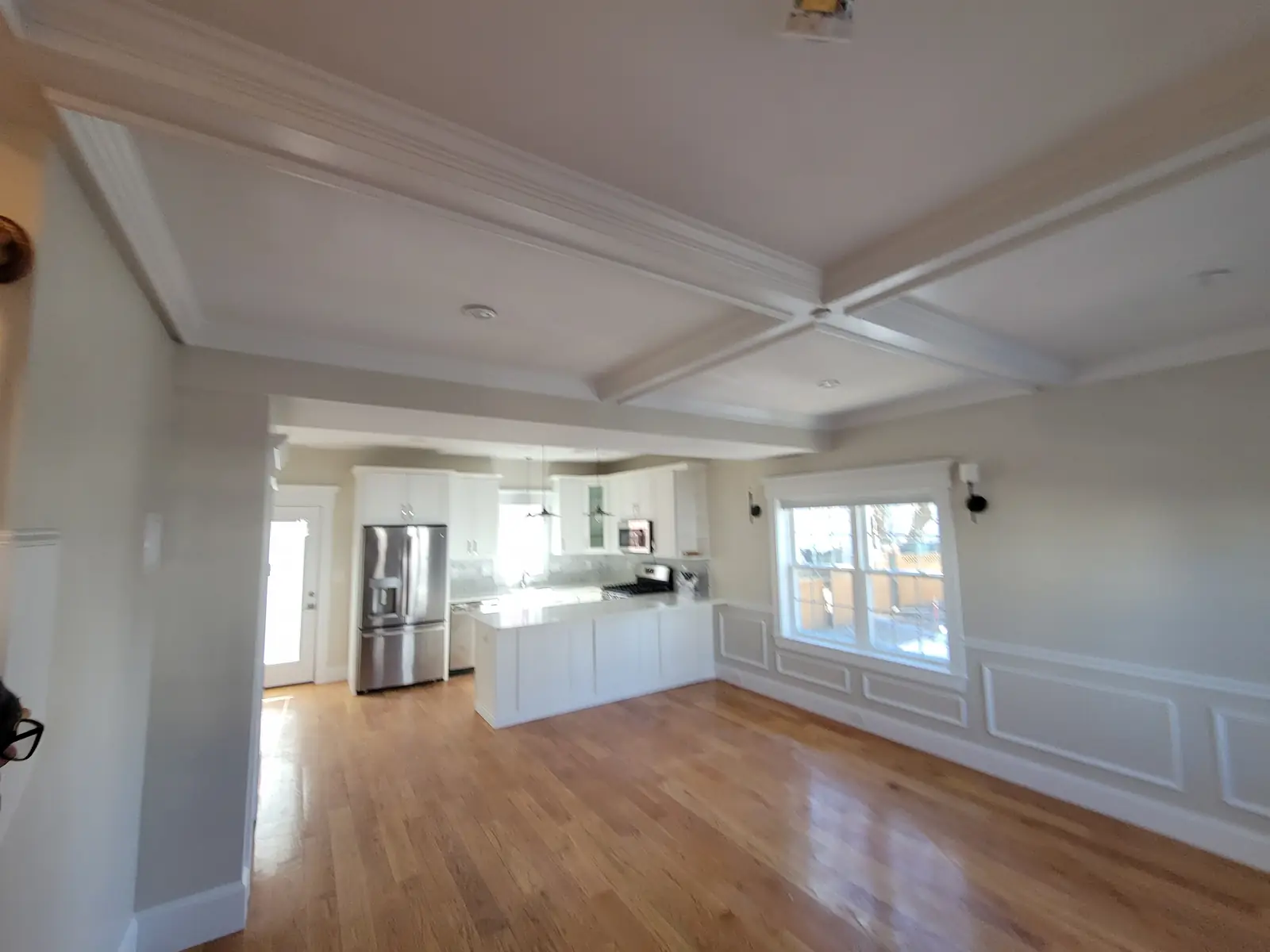 02 SalemA whole house in Salem, made newThree floors, two bathrooms, a new kitchen, new stairs and oak floors everywhere. One crew, one schedule, one number to call.
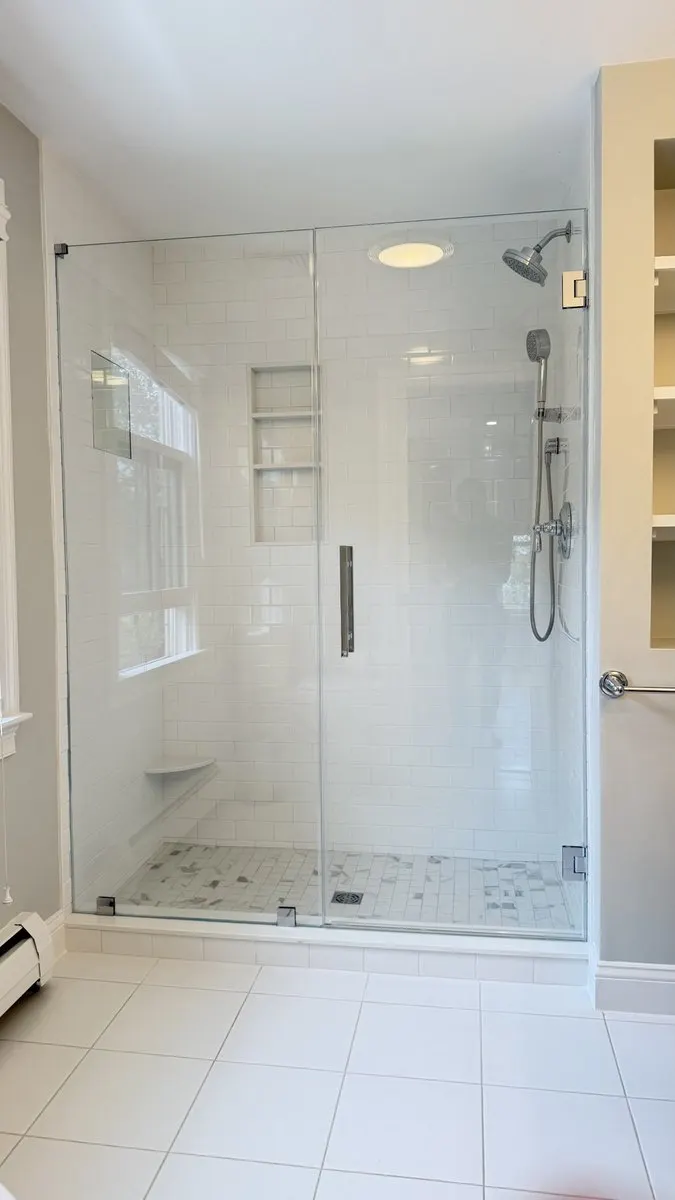 03 Manchester-by-the-SeaA walk-in shower in Manchester-by-the-SeaAn old tub alcove taken to the studs and built back as a walk-in shower with a glass door, a mosaic floor and two niches.
