- Bathroom RemodelingTubs, vanities, tile and fixtures
- Showers & Glass DoorsWalk-in showers, benches and glass doors
- Niches & Accent TileShower niches, mosaics and borders
- Kitchen RemodelingBacksplashes, floors and full kitchens
- Tile FloorsKitchens, baths, entries and patterns
- Custom Tile WorkPatterns, borders and one-off details
- PaintingWalls, ceilings, trim and doors
- CarpentryTrim, doors, framing and built-ins
- Full RemodelsEvery room, start to finish
- Outdoor PatiosStone and tile patios
Porcelain vs ceramic tile: which one for your bathroom, shower or floor.
What the standard says, where each one works, slip ratings and what changes for the installer.
Updated November 2026. The sources are at the end of the page.
The short answer
Porcelain is a ceramic tile that barely takes in water.
Porcelain is not a different material from ceramic. It is a ceramic tile dense enough to have a water absorption of 0.5% or less in the standard test (ASTM C373), which is the porcelain definition in ANSI A137.1. Tile that absorbs more than that is non-porcelain ceramic. The Porcelain Tile Certification Agency certifies tile that really meets the line.
Indoors, both kinds work on walls, floors and showers when the tile is rated for the use and installed right. The choice matters most on floors that take hard wear and anywhere outside, where only tile the manufacturer rates for exterior use belongs. Porcelain is harder to cut and harder to bond, so it needs the right mortar and a careful installer.
The definition
What makes a tile porcelain.
The Tile Council of North America (TCNA) puts it plainly: standards define porcelain tile as an impervious tile with a water absorption of 0.5% or less, measured by the ASTM C373 test method. Non-porcelain tiles absorb more than 0.5%. That is the line in ANSI A137.1, the American standard for ceramic tile.
The word on the box is not always proof. TCNA notes that some tile sold as porcelain does not meet the 0.5% line. To deal with that, the Ceramic Tile Distributors Association and TCNA launched the Porcelain Tile Certification Agency (PTCA). Manufacturers whose tile passes can print the PTCA mark on the packaging. If it matters for your floor, look for that mark or ask the seller for the test results.
Glazed or through-body
What is on the surface.
- Unglazed porcelain. Often called "through-body," because the color on top runs all the way through. TCNA says these tiles tend not to show wear even in extreme use, and unglazed porcelain may have better slip resistance.
- Glazed porcelain. The glaze fills in the microscopic holes of the surface, so glazed tile is usually easier to clean.
- Glazed ceramic (non-porcelain). The glaze is the part you walk on. TCNA advises checking that the tile has been tested and that the glaze hardness suits the use. On a wall a glaze takes very little wear. On a kitchen floor it takes all of it.
Room by room
Where each one works.
- Bathroom and shower walls. Either one. In the TCNA shower methods a waterproof membrane covers the backing under the whole tiled area, so the tile is not what keeps water out of the wall. Non-porcelain tile is easier to cut, which helps around valves, niches and window returns.
- Bathroom and shower floors. Wet floors are about slip resistance more than absorption. Read the slip rating below, and remember TCNA's note that unglazed porcelain may grip better.
- Kitchen floors. Heavy traffic and dropped pans. Porcelain, or a non-porcelain tile whose glaze is rated for floors.
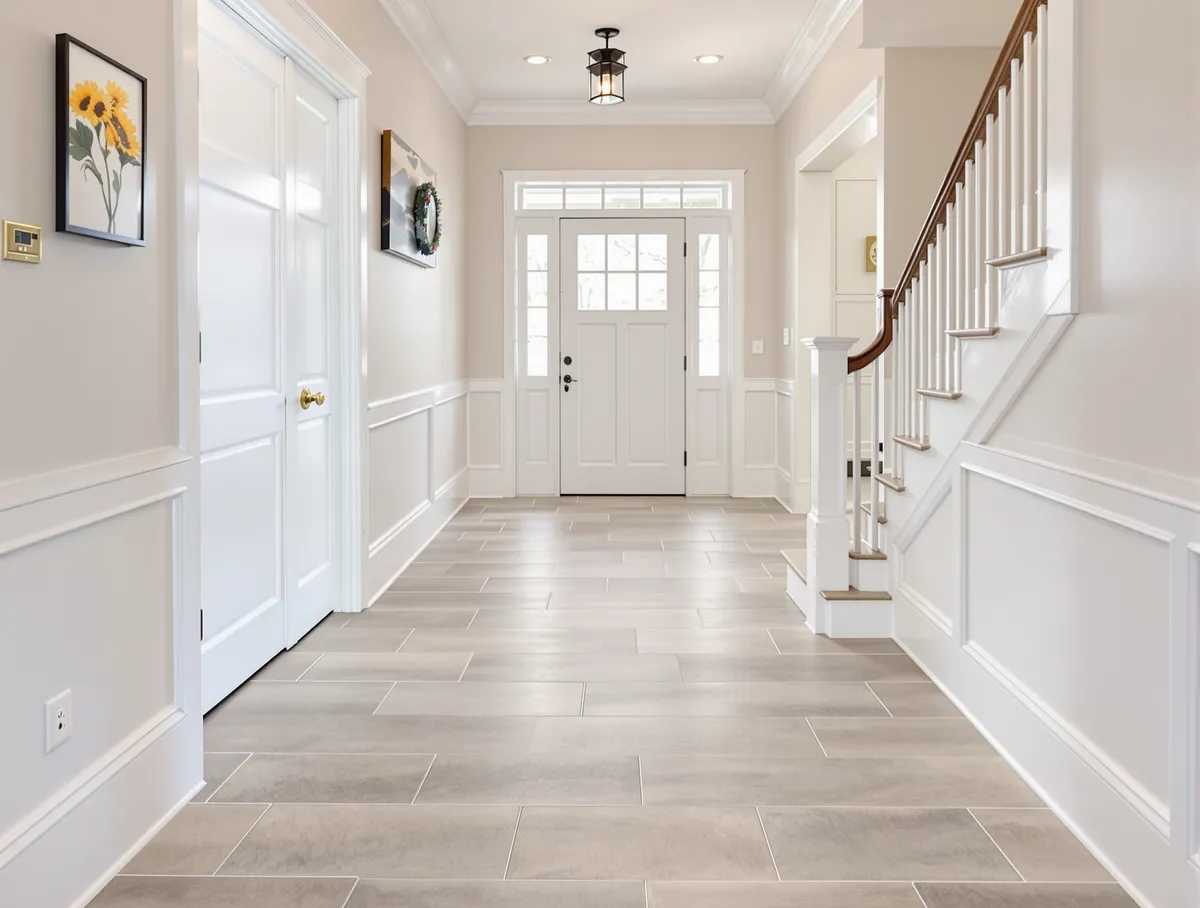
- Entries and mudrooms. Wet boots all winter. Choose a floor tile rated for wet use, and through-body porcelain if you want wear that does not show.
- Outside. Only tile the manufacturer rates for exterior use. More on that next.
Usually you choose and buy the tile, with our guidance, and we supply the rough materials. Bring us the box or the product sheet and we will read the ratings with you.
Outside
Patios, steps and North Shore winters.
Outdoor tile here freezes and thaws every winter. TCNA's rule for exteriors is simple: the tile must be rated by the manufacturer for exterior use. Porcelain's low absorption makes it usually frost resistant, but TCNA says "not always," and many non-porcelain quarry tiles are rated for exteriors. Go by the rating, not the word porcelain.
The tile is only part of it. TCNA lists what an exterior installation needs:
- a slope that drains water from the system before it can soak in;
- freeze-thaw resistant mortars, which are often necessary;
- expansion joints for the movement that comes with large temperature swings;
- full, compacted grout joints, preferably sealed with a vapor permeable sealer;
- a waterproof layer below the tile when the tile sits over living space, like a deck over a room.
A good contractor plans the slope and drainage before the first tile goes down. Becker also builds outdoor patios.
Slip resistance
What DCOF and the 0.42 number mean.
Tile spec sheets list a DCOF, the dynamic coefficient of friction. TCNA defines it as the ratio of the force needed to keep one surface sliding over another. The standard behind it, ANSI A326.3, sorts floor tile into five product use categories:
- Interior, Dry. A dry DCOF of 0.42 or more.
- Interior, Wet. A wet DCOF of 0.42 or more, or declared by the manufacturer.
- Interior, Wet Plus; Exterior, Wet; Oils and Greases. Declared by the manufacturer, with no single number.
So the well known 0.42 figure applies to level interior floors. The earlier edition of the standard set it for level interior floors expected to be walked on when wet with water. TCNA notes that ramps and sloped surfaces are not covered by any of the five categories, and outdoor tile goes by the manufacturer's declaration.
TCNA is also clear about the limits: DCOF helps compare surfaces, but it does not predict whether a person will slip, and it should not be the only factor. Maintenance, wear and what ends up on the floor all count. Coated surfaces belong only where they can be kept dry, unless the coating maker says otherwise. For a bathroom floor, look for a tile classified at least for interior wet use, and for a shower floor ask what the manufacturer declares.
Installation
Cutting, mortar and large tile.
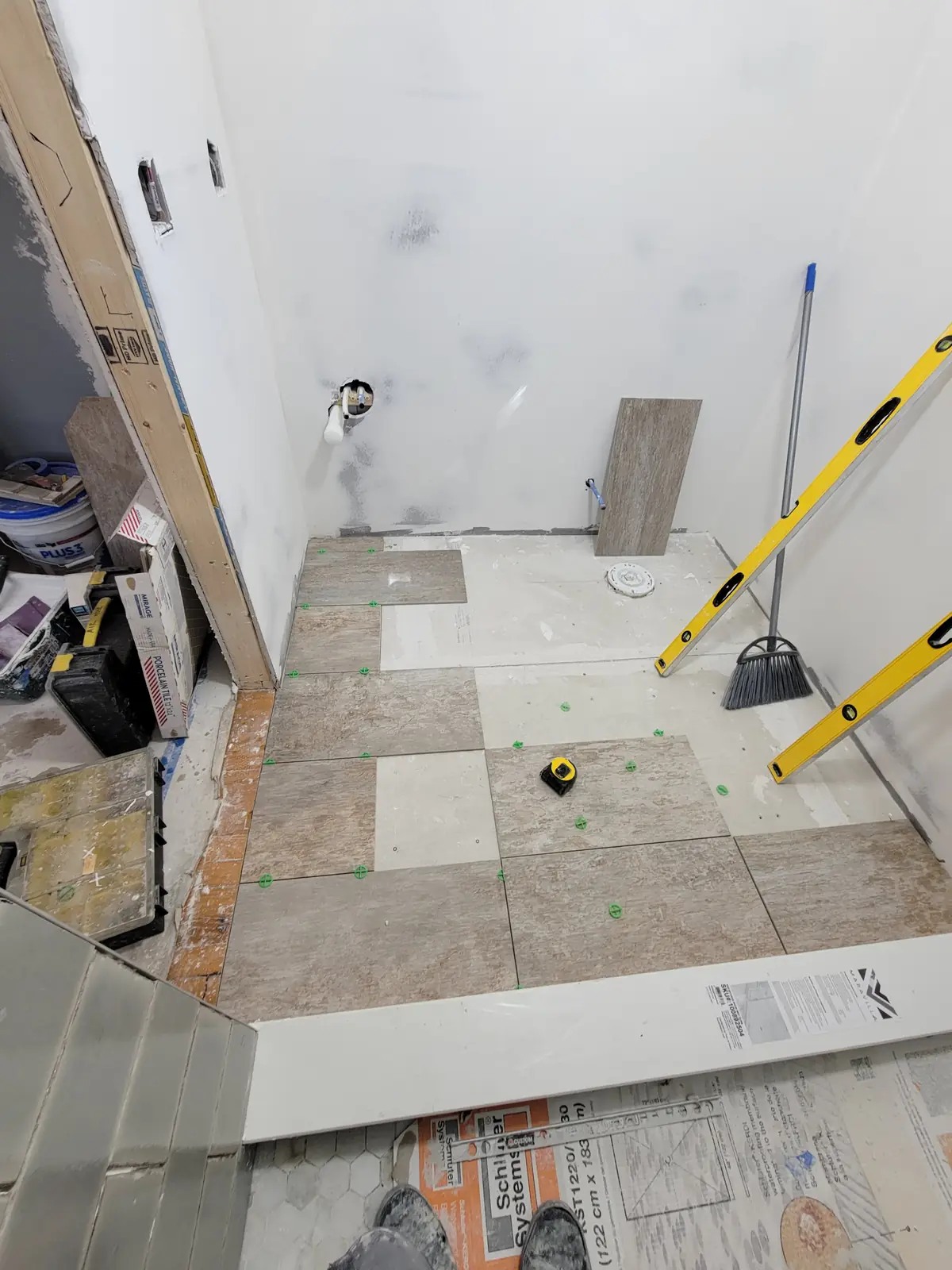
TCNA says porcelain tiles are harder to bond and harder to cut, and that this mostly matters to the installer as long as the right materials are used. In practice that means:
- The right mortar. Custom Building Products notes that porcelain and stone tile makers recommend a polymer modified mortar over concrete, plywood and membranes, and that TCNA recommends mortars meeting ANSI A118.4, A118.15 and A118.11 for those installations.
- A flat surface for large tile. For tile with an edge longer than 15 inches, the ANSI tolerance is no more than 1/8 inch of variation in 10 feet, and no more than 1/16 inch in 24 inches.
- Lippage. That is the difference in height between the edges of tiles next to each other. TCNA lists the causes: tile thickness, warpage, joint width, and an uneven surface below. Light coming in low across the floor makes it show. For running bond patterns with tile longer than 18 inches on an edge, the offset should be no more than 33%.
- Full support. Mortars made for large and heavy tile can build from 3/32 up to 3/4 inch after the tile is beaten in. Installers pull up a tile now and then to check coverage, and back butter large tile when coverage falls short.
On our jobs a floor takes from one day to a few weeks, depending on its size and on what the subfloor needs first.
Questions
What homeowners ask about porcelain and ceramic.
Is porcelain or ceramic better for a shower?
Either can go on shower walls. In the TCNA shower methods a waterproof membrane under the whole tiled area keeps water out of the wall, not the tile. For the shower floor, look at the slip rating the manufacturer declares.
Is porcelain better for a bathroom floor?
It is a good choice, but not the only one. What matters on a bathroom floor is a tile rated for floors and for wet use. TCNA notes that unglazed porcelain may have better slip resistance, and that glazed non-porcelain tile should have a glaze hardness suited to the use.
Which is better for a kitchen floor?
Porcelain, or a non-porcelain tile with a glaze rated for floors. Unglazed through-body porcelain tends not to show wear because the color runs all the way through.
Can I use porcelain tile outside in Massachusetts?
Only if the manufacturer rates that tile for exterior use. Porcelain is usually frost resistant, but TCNA says not always. The installation also has to drain, use freeze-thaw resistant mortar and have expansion joints.
How do I know a tile is really porcelain?
Look for the Porcelain Tile Certification Agency (PTCA) mark on the box. Porcelain means a water absorption of 0.5% or less in the ASTM C373 test, and TCNA warns that some tile sold as porcelain does not meet it.
What DCOF should bathroom floor tile have?
Under ANSI A326.3, tile for level interior floors that get wet should have a wet DCOF of 0.42 or more, or a manufacturer declaration. TCNA cautions that DCOF does not predict whether someone will slip, so cleaning and upkeep still matter.
Sources
Where these answers come from.
Official pages first. Rules change: check the source, or ask us at the quote visit.
- Tile Council of North America (TCNA), FAQ: porcelain vs. non-porcelain
- TCNA, the Porcelain Tile Certification Agency (PTCA)
- Tile Council of North America, Standards and the ceramic tile industry (ASTM Standardization News): ASTM C373 water absorption, ANSI A137.1 and the 0.5% porcelain line
- TCNA, Dynamic Coefficient of Friction: frequently asked questions (ANSI A326.3)
- TCNA, FAQ: exteriors
- TCNA, FAQ: showers
- TCNA, FAQ: lippage
- Custom Building Products, large format tile (technical paper)
Last checked November 2026.
Keep going
Keep reading.
Costs, the service itself and the other guides.
Let’s build it.
Tell us about the job. We answer right away and book the visit.
Tell us about the job. We answer right away and book the visit.
Let’s build it.
Let’s build it.
Let’s build it.
Let’s build it.
Let’s build it.
Tell us about the job. We answer right away and book the visit.
Projects
Start to finish.
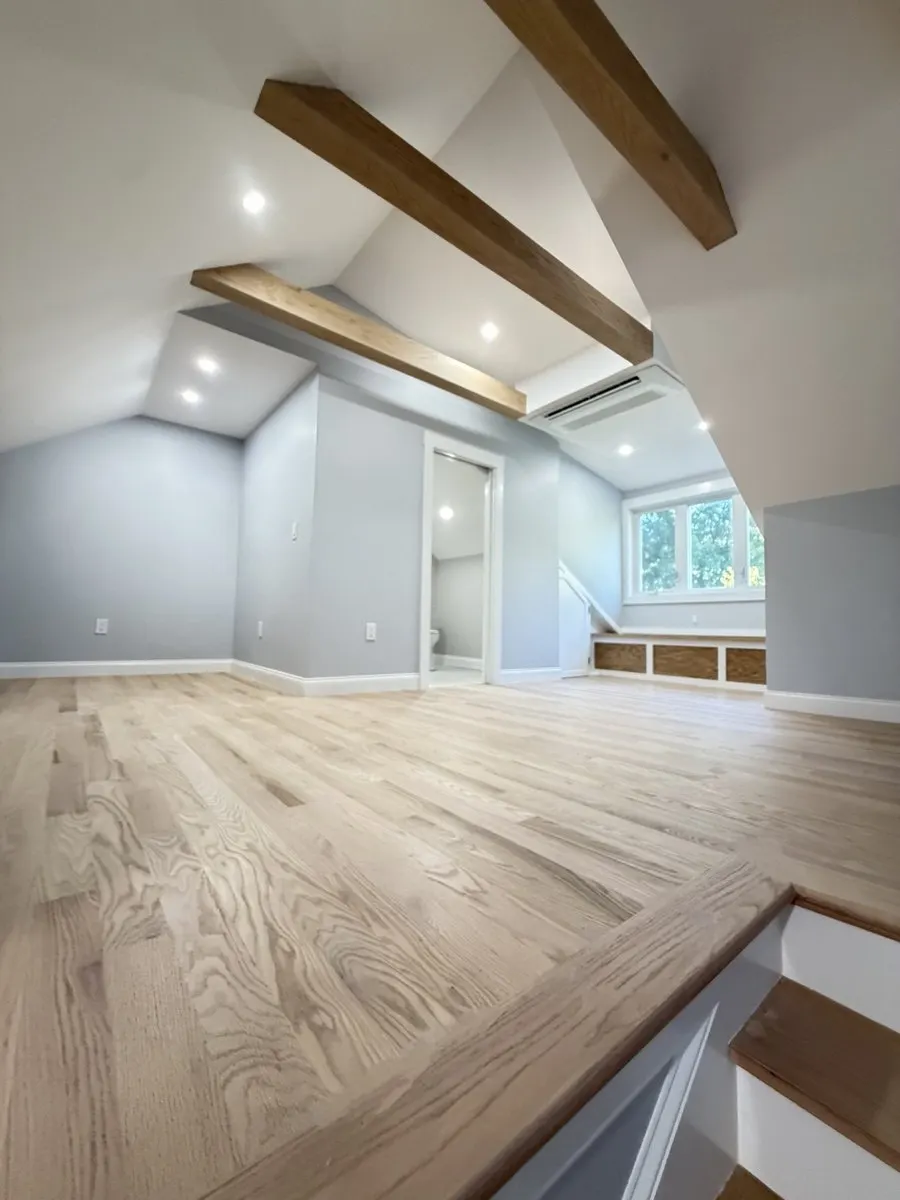 01 SaugusAn attic turned into a living floorAn open attic became a bright floor with a full bathroom, a window seat and a new oak stair.
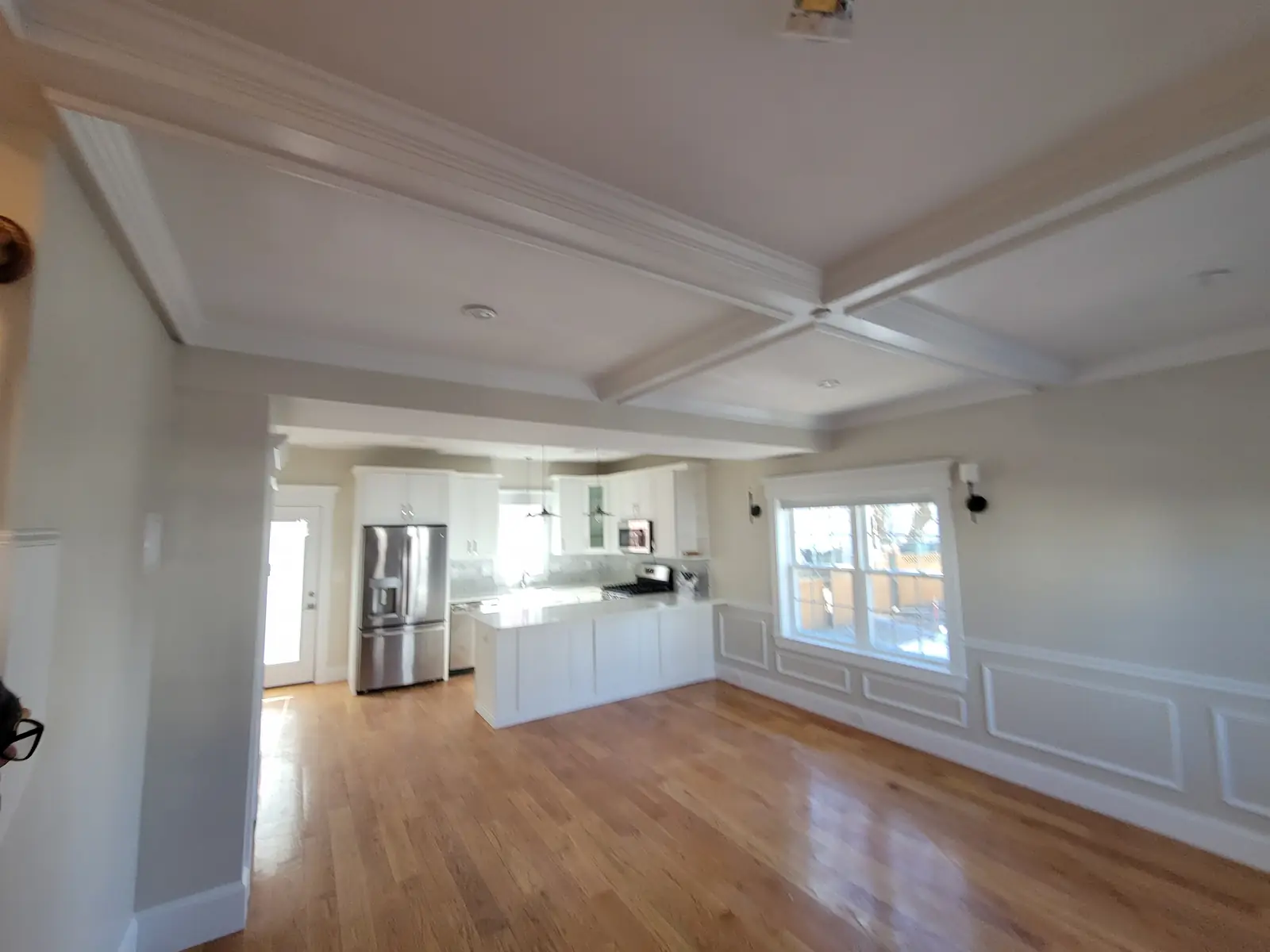 02 SalemA whole house in Salem, made newThree floors, two bathrooms, a new kitchen, new stairs and oak floors everywhere. One crew, one schedule, one number to call.
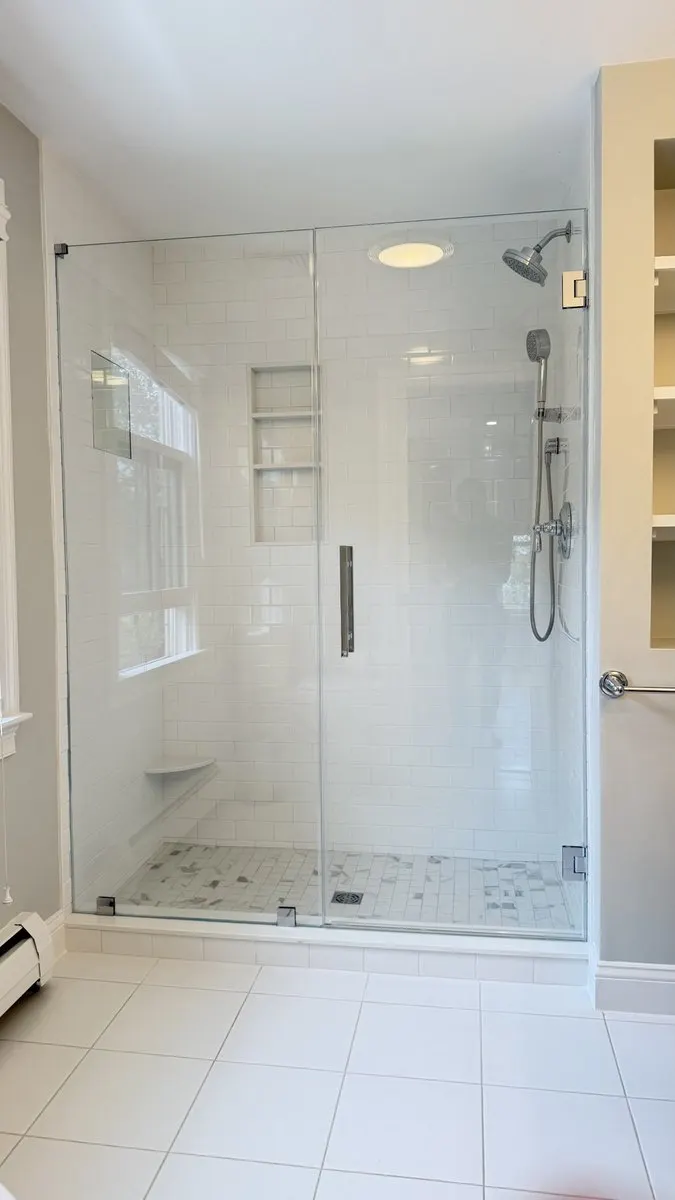 03 Manchester-by-the-SeaA walk-in shower in Manchester-by-the-SeaAn old tub alcove taken to the studs and built back as a walk-in shower with a glass door, a mosaic floor and two niches.
